Naija & Western gistNews · Celebs · Trends

Trend Naija

Home › World & West

World & West
Reported

UK drops plan to make care workers wait 15 years for settlement

A globe of the Earth
Stock image: Zde / Wikimedia Commons, CC BY-SA 4.0

The UK government has reportedly dropped a plan that would have required some migrant care workers already in Britain to wait 15 years before they could settle permanently, a change that affects many Nigerians working in the sector.

What changed

Home Secretary Shabana Mahmood told the House of Commons on Monday, 2 November 2026, that care workers who joined the social care visa route before May 2025 and earn at least £25,000 a year in the sector will keep a five-year route to indefinite leave to remain. She also scrapped the proposed 15-year wait for other lower-paid workers, replacing it with a 10-year route.

The new rules

Mahmood said settlement will now be more closely linked to a person's contribution, adding that the right to live in Britain must be earned. A five-year route will remain for people earning more than £50,000 a year and for qualifying workers in health and education. People earning more than £125,000 could settle in three years. Most other migrants, including those earning under £50,000, would face a 10-year route, while being able to renew their temporary visas.

Why the plan was changed

The reversal followed opposition from Labour MPs, trade unions and migrant groups, who argued it was unfair to change the rules for people who came to Britain under different conditions.

What it means for Nigerians

Nigerians are among the largest groups of overseas care workers recruited to the UK in recent years. Indefinite leave to remain allows a person to live, work and study in Britain without time limits and claim benefits where eligible, and is usually a step towards citizenship.

More gist

World & WestReported
A globe of the Earth
Stock image: Zde / Wikimedia Commons, CC BY-SA 4.0

Hackers send fake nuclear attack alerts to millions in Russia and Ukraine

Emergency warning services in Russia and Ukraine were reportedly hacked to send false alerts of nuclear, chemical and radiation threats. Authorities in both countries confirmed the incidents and said their systems had been restored.

Read more

Emergency alert services in both Russia and Ukraine were reportedly hit by cyber attacks that sent false warnings of nuclear, chemical and radiation threats to civilians, according to reports on Monday, 2 November 2026.

In Russia

Fake nuclear attack warnings appeared on channels linked to Russia's Emergency Situations Ministry in Moscow, St Petersburg and several other regions at about 2.45am, reportedly telling residents to gather three weeks' supply of food and take shelter in cellars. Similar messages were reported on the ministry's mobile app, by text message and on the state-backed messaging platform MAX. The ministry described it as a massive cyber attack, but said its sirens, loudspeakers, television and radio warning systems had not been affected. It has not been established who carried out the attack.

In Ukraine

Hours earlier, Ukraine's Air Alert service sent a series of false notifications claiming radiation and chemical threats in Kyiv, a nuclear alert across the country and street fighting in the capital, and telling residents to stay indoors. Ukrainian authorities confirmed the service had been hacked and said it was working normally again after midnight. The app normally warns people of incoming Russian missile and drone attacks, often giving them only minutes to find shelter. Hours after the false alerts, real warnings sounded during a Russian attack on Odesa that reportedly injured four people.

Background

The incidents came amid continued strikes by both sides and talk of possible negotiations. A Kremlin adviser said he believed President Vladimir Putin would take a phone call from President Volodymyr Zelensky, although Putin has refused his calls in the past.

Why it matters

Experts warn that attacks on alert systems are dangerous because they can cause panic and make people less likely to trust genuine warnings.

World & WestReported
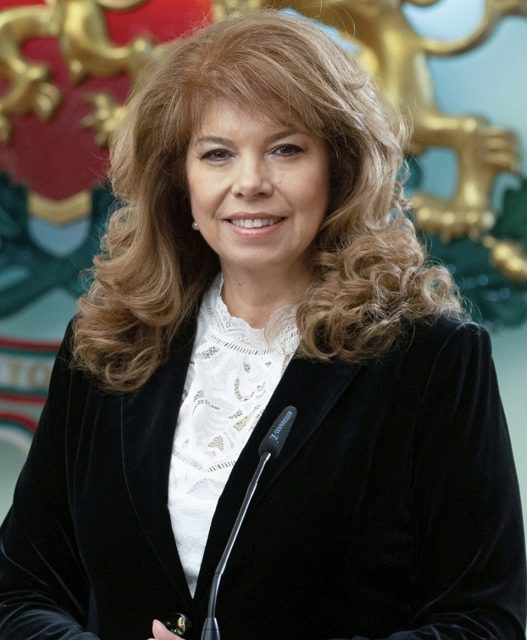
Bulgarian President Iliana Yotova
Photo: Unknown author / Wikimedia Commons, CC BY 2.5 bg

Iliana Yotova becomes Bulgaria's first elected female president

Bulgaria's acting president Iliana Yotova has reportedly won the presidential runoff with about 57.6% of the vote, becoming the first woman elected to the country's highest office.

Read more

Iliana Yotova has won Bulgaria's presidential runoff, becoming the first woman ever elected to the country's highest office, according to near-final results released on Monday, 2 November 2026.

The result

The Central Election Commission reportedly said the 62-year-old won 57.58 per cent of the vote, with 99.95 per cent of polling station results counted. Her ticket, with running mate Kiril Valchev, defeated the opposition pair of former caretaker prime minister Andrey Gyurov and Georgi Kandev, who received 39.47 per cent.

Who is Iliana Yotova

Yotova has been acting president since January 2026, when Rumen Radev resigned to pursue a career in parliament. She had served as his vice-president for two terms after they were elected together in 2016 and re-elected in 2021. Before that, she was a member of the European Parliament from 2007 to 2017, and she earlier worked as a journalist at Bulgarian National Television.

Why it matters

The victory is a historic first for Bulgaria, a member of the European Union and NATO, which had never before elected a woman as president. In Bulgaria the president is head of state and commander-in-chief, while day-to-day government is led by the prime minister.

What happens next

Yotova will be sworn in for a full five-year term once the final results are confirmed.

World & WestReported
A globe of the Earth
Stock image: Zde / Wikimedia Commons, CC BY-SA 4.0

Trump says US may have to give Iran 'the hammer', Tehran warns of long war

US President Donald Trump has reportedly told a rally in Iowa that America may eventually have to strike Iran again, saying he has held back to save lives. Iran's army says any new war would last longer than before.

Read more

US President Donald Trump has renewed his threats of further military action against Iran, and Tehran has warned that any new war would be longer and wider than past hostilities.

What Trump said

Speaking at a rally in Iowa on Sunday, 1 November 2026, ahead of the US midterm elections on 3 November, Trump reportedly said the only reason he had not finished with Iran was that he wanted to be nice and save lives, but that at some point the US would have to give Iran 'the hammer'. The comments followed earlier signals from his administration that more targets were being considered.

Iran's response

Iranian army spokesman Mohammad Akraminia said on state television that Iran was fully prepared for a long conflict. He warned that a future war could last longer than previous fighting and that the American president would not be able to decide when or how it would end.

Background

Tensions between the two countries have remained high since earlier US strikes on Iran. Iran's Supreme Leader warned the US and Israel last week against new attacks. Trump has made his tough stance on Iran part of his campaign message ahead of the midterm elections, in which control of Congress is at stake.

Why it matters

Any new conflict in the region could push up global oil prices, which affects Nigeria's earnings from crude oil as well as fuel prices around the world.

World & WestReported
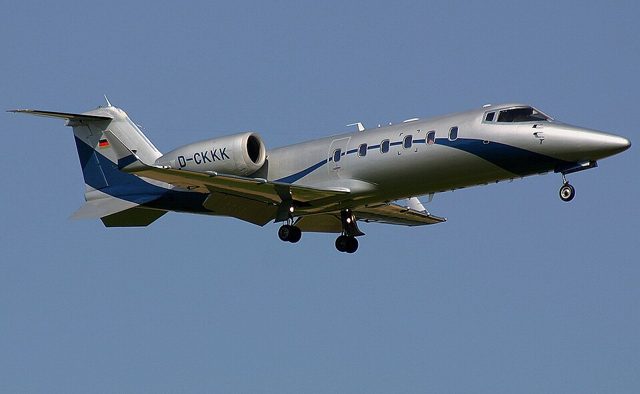
A Learjet 60 business jet, the same model as the crashed plane (file photo)
Photo: Lars Henseleit (Lhensele at de.wikipedia) / Wikimedia Commons, Public domain

Nine killed as Bahamas-bound private jet plunges into Florida roadside

A Learjet 60 carrying nine people crashed in Palm Beach County, Florida, on Sunday, killing everyone on board. The pilot had reported ice and turbulence before declaring an emergency, and the jet narrowly missed homes and a busy road.

Read more

A private jet carrying nine people crashed beside a road in Palm Beach County, Florida, on Sunday, 1 November 2026, killing everyone on board in a fireball that was caught on video by passing motorists.

What happened

US Transportation Secretary Sean Duffy said the Learjet 60 went down at about 12.50pm local time and described the crash as a horrific tragedy. The aircraft had taken off from Austin-Bergstrom International Airport in Texas and was flying to the Bahamas. Florida governor Ron DeSantis said there were no immediate reports of anyone on the ground being hurt, and described the crash as cataclysmic, saying the plane looked like a missile coming down and left a large crater by the roadside. Reports said the site was a few miles from President Donald Trump's Mar-a-Lago estate.

The final minutes

According to air traffic control recordings and flight tracking data, the jet was cruising at about 35,000 feet when the pilots reported light ice, moderate turbulence and rain, and asked to climb a further 2,000 feet. Shortly afterwards the plane went into a steep dive. The pilot declared a mayday, reporting that the aircraft was descending at 10,000 and then 20,000 feet per minute in an overspeed condition, before saying the jet was going to crash. Tracking data showed the rate of descent at one point exceeded 32,000 feet per minute.

The investigation

The National Transportation Safety Board is leading the investigation, supported by a team from the Federal Aviation Administration. The airport confirmed it was a private flight but did not say who was on board. Records list the plane's owner as a company registered in Delaware. Heavy rain had hit the region on Sunday, and a flood watch was in place until Monday afternoon.

Co-pilot identified

On Monday, relatives identified the co-pilot as 20-year-old Nathalia Gadelha, who grew up in Palm Beach County. She earned her private pilot's licence at 17, in October 2023, before she could even drive, and had trained at a flight school with a branch in Pompano Beach. She had said she dreamed of becoming a commercial airline pilot. The other victims have not yet been publicly named.

What happens next

Investigators are expected to examine the wreckage, the weather and the aircraft's maintenance history. The names of the victims have not yet been released.