Naija & Western gistNews · Celebs · Trends

Trend Naija

Home › Naija news

Naija news
Reported

NLC and TUC clash over Tinubu's ₦70,000 transport allowance
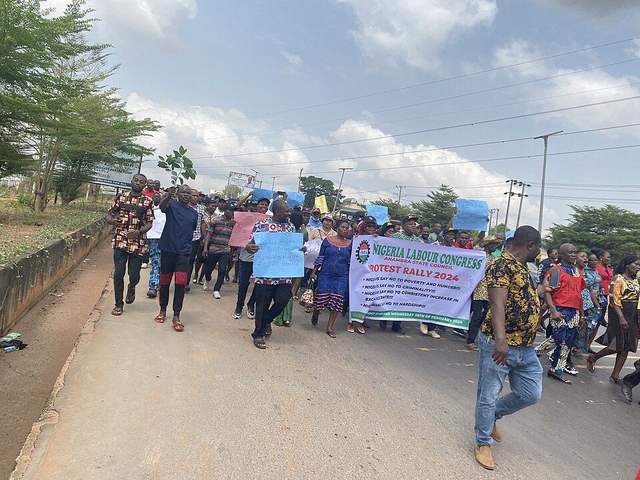
Nigeria Labour Congress members on a protest march
Photo: Altruistic2020 / Wikimedia Commons (CC0)

Nigeria's two main labour centres are at odds over the Federal Government's ₦70,000 transport allowance for workers, exposing divisions within organised labour.

What happened

In comments reported on Friday, 30 October 2026, Nigeria Labour Congress (NLC) president Joe Ajaero is said to have rebuked the Trade Union Congress (TUC) for rejecting the allowance. He reportedly argued that the TUC did not sign the agreement and should not oppose something it did not negotiate. Ajaero described the allowance, which the NLC says will last six months, as an important step to help workers cope with higher petrol prices and living costs, and said it could serve as a reference for future negotiations.

The TUC's position

The TUC has rejected the allowance and is reportedly demanding a ₦300,000 national minimum wage instead.

A temporary fix

Ajaero stressed that the allowance is not a permanent solution and warned that the six months must not run out before a new minimum wage framework is agreed. He said future wage talks should take account of transport, food, housing and other basic costs. Earlier this week he said a ₦1 million minimum wage would collapse the economy.

Opposition reaction

ADC presidential candidate Atiku Abubakar has rejected the allowance as far too small, with his campaign questioning what a month's worth of support could buy in fuel. His campaign also said private sector workers, traders and informal workers are left out.

What happens next

Talks on a new minimum wage are expected to continue, and the split between the NLC and TUC could affect labour's bargaining power.

More gist

Naija newsReported
Borno Governor Babagana Zulum
Photo: BScar23625 / Wikimedia Commons, CC0

NNPC ready to resume oil exploration in Borno after two-year pause

NNPC Limited says it is prepared to restart oil exploration in Borno State after operations were halted for more than two years. Governor Babagana Zulum promised security support but asked the company to restore gas supply and upgrade idle equipment first.

Read more

Nigeria's national oil company, NNPC Limited, says it is ready to restart oil exploration in Borno State, more than two years after work stopped.

What happened

An NNPC delegation led by its chairman, Ahmadu Musa Kida, and Group Chief Executive Officer Bashir Ojulari met Governor Babagana Zulum at Government House in Maiduguri on Wednesday, according to reports published on Friday, 30 October 2026. The company said it was prepared to resume exploration in an oil basin covering seven local government areas of the state and to work with the state government and local communities. No date for the restart was given. The two sides also discussed a planned solar power project.

Zulum's conditions

Zulum reportedly pledged full support for the operations and rejected the idea that insecurity caused the suspension, saying soldiers, police and members of the Civilian Joint Task Force were already guarding the sites and equipment. Before work fully resumes, he asked NNPC to honour an earlier promise to supply gas to the state, saying its withdrawal was a key reason for the stoppage, and to upgrade equipment that has been lying idle for more than two years. He also backed more solar plants to protect residents from rising fuel costs.

Background

The search for oil in the North East has long been part of government efforts to diversify Nigeria's oil production away from the Niger Delta. Exploration in Borno was disrupted for years by the Boko Haram insurgency, and oil workers were attacked in the area in 2017.

What happens next

NNPC is expected to work out a timetable with the state government once the conditions are discussed further.

Naija newsReported
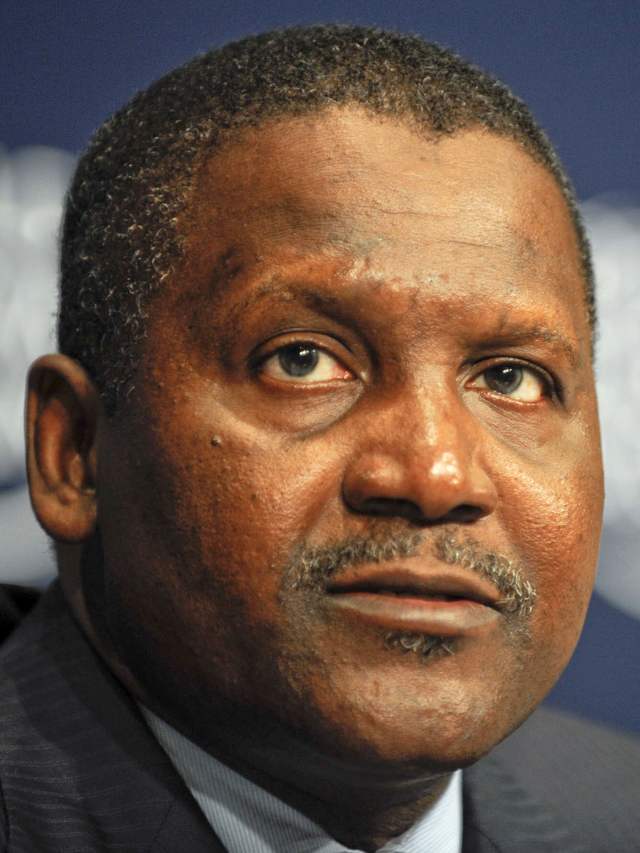
Aliko Dangote, whose Dangote Cement led the rally
Photo: World Economic Forum / Wikimedia Commons, CC BY-SA 2.0

Nigerian stock market hits record high as Dangote Cement jumps nearly 6%

The Nigerian Exchange All-Share Index closed at a record 254,083 points on Thursday, with market value rising to about ₦165 trillion. Dangote Cement gained 5.82% to lead the rally.

Read more

The Nigerian stock market closed at a new all-time high on Thursday, 29 October 2026, as gains in Dangote Cement and other large companies pushed investors' wealth higher.

The numbers

The Nigerian Exchange (NGX) All-Share Index rose by 0.47 per cent to close at 254,083.02 points, according to reports. The total value of listed shares climbed to about ₦164.97 trillion, up from ₦164.19 trillion the day before, a gain of about ₦779 billion. That beat the previous record of about ₦164.91 trillion set on 27 October.

Who led the rally

Dangote Cement, one of the largest companies on the exchange, gained 5.82 per cent to close at ₦1,420 per share, and helped lift the industrial goods index by more than 3 per cent. Among smaller stocks, payment company eTranzact rose by 10 per cent, while Sovereign Trust Insurance, FTG Insurance, McNichols and Zichis Agro-Allied Industries also posted strong gains.

Background

Nigerian stocks have performed strongly this year as investors respond to falling inflation, a more stable naira and strong company earnings. Inflation fell to 14.63 per cent in September, according to official figures cited by the government, and external reserves have risen to about $55 billion.

What it means

For ordinary investors, the record high means the value of many shareholdings has risen sharply, although analysts often warn that markets can fall quickly after strong rallies.

Naija newsReported
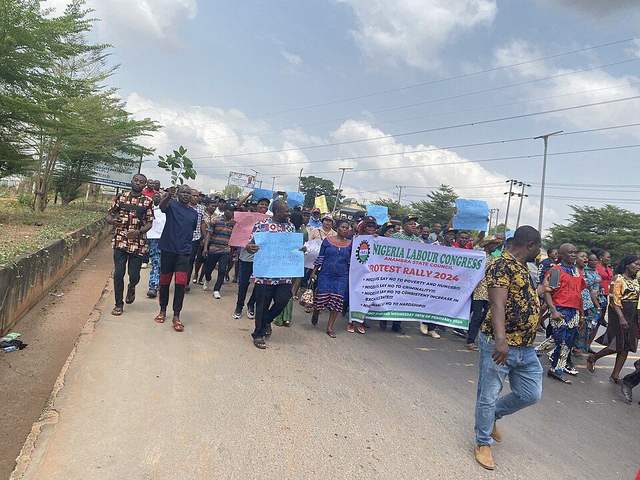
Nigeria Labour Congress members on a protest march
Photo: Altruistic2020 / Wikimedia Commons (CC0)

NLC president Ajaero says a ₦1m minimum wage would collapse the economy

NLC president Joe Ajaero has reportedly said a ₦1 million monthly minimum wage would collapse Nigeria's economy. He said the focus should be on bringing down living costs and strengthening the naira, as talks on wages continue.

Read more

The president of the Nigeria Labour Congress (NLC), Joe Ajaero, has reportedly said that a minimum wage of ₦1 million a month would bring down the Nigerian economy, in comments that surprised many workers.

What he said

Speaking in an interview on Channels Television, reported on Thursday, 29 October 2026, Ajaero is said to have argued that the priority should be lowering the cost of living and improving the value of the naira rather than chasing very large pay figures. He reportedly said that without tackling inflation, the weak currency and high living costs, bigger salaries on paper would not make workers better off, and that government must first take steps to stabilise the economy.

Background

Labour unions and the Federal Government are still discussing a review of the national minimum wage, which was raised to ₦70,000 a month in 2024. Some workers and activists have called for a much higher figure because of rising prices. The government recently approved a ₦70,000 monthly transport allowance for public workers to ease the impact of high fuel prices, a move that the opposition criticised as too small.

How people reacted

The comments drew mixed reactions online. Some users said the NLC leader was being realistic about what the economy can afford, while others said labour should be pressing for the highest possible increase at a time when food and transport costs have risen sharply.

What happens next

Talks between labour and the government are expected to continue, with wages likely to become a major issue in the run-up to the 2027 elections.

Naija newsReported
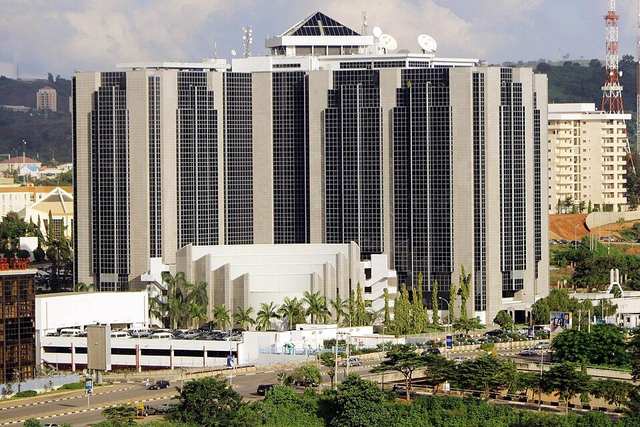
Central Bank of Nigeria headquarters in Abuja
Photo: GodwinPaya / Wikimedia Commons (CC BY-SA 4.0)

CBN warns banks to store payment data in Nigeria by January 2027

The Central Bank of Nigeria says banks and other regulated firms must store critical payment data inside the country by 1 January 2027, and that the deadline will not move. Firms that fail to comply face sanctions.

Read more

The Central Bank of Nigeria (CBN) has told banks and other financial institutions that the deadline for keeping critical payment transaction data inside Nigeria remains 1 January 2027.

What happened

The CBN Deputy Governor for Financial System Stability, Lamido Abubakar Yuguda, gave the warning at a regulatory meeting in Lagos organised with the National Information Technology Development Agency (NITDA), reported on Thursday, 29 October 2026. He said the date had not changed and that institutions that break the rule would face sanctions. Deliberate attempts to frustrate the policy would not be tolerated, he added.

Why the rule exists

The CBN says storing payment data in the country will improve supervision, make the financial system more resilient and protect sensitive customer information, as more Nigerians rely on mobile apps, online banking and fintech services. The meeting focused on the National Sovereign Cloud Initiative, which aims to keep government and critical data on infrastructure within Nigeria.

What banks must do

Yuguda reportedly stressed that simply moving data into the country will not make it safe. Banks must also improve their cybersecurity, plans for keeping services running during outages, disaster recovery and risk management. They will remain responsible for risks linked to cloud providers and other technology partners.

What it means for customers

For ordinary customers, the change should be mostly invisible, but the regulator says it should make it harder for sensitive financial data to be exposed and easier for authorities to investigate fraud.