Naija & Western gistNews · Celebs · Trends

Trend Naija

Home › Naija news

Naija news
Reported

NLC president Ajaero says a ₦1m minimum wage would collapse the economy
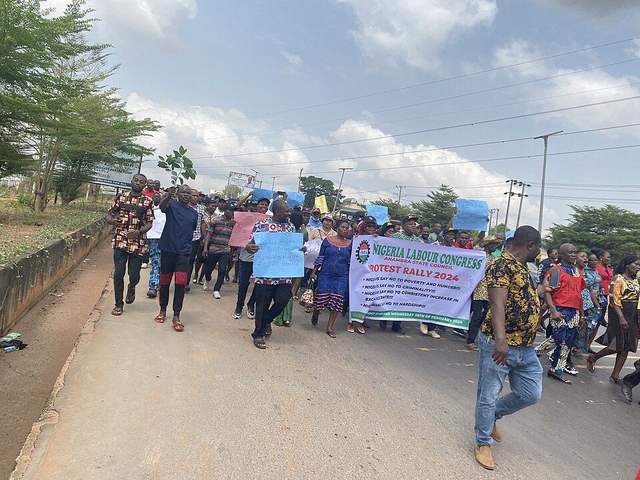
Nigeria Labour Congress members on a protest march
Photo: Altruistic2020 / Wikimedia Commons (CC0)

The president of the Nigeria Labour Congress (NLC), Joe Ajaero, has reportedly said that a minimum wage of ₦1 million a month would bring down the Nigerian economy, in comments that surprised many workers.

What he said

Speaking in an interview on Channels Television, reported on Thursday, 29 October 2026, Ajaero is said to have argued that the priority should be lowering the cost of living and improving the value of the naira rather than chasing very large pay figures. He reportedly said that without tackling inflation, the weak currency and high living costs, bigger salaries on paper would not make workers better off, and that government must first take steps to stabilise the economy.

Background

Labour unions and the Federal Government are still discussing a review of the national minimum wage, which was raised to ₦70,000 a month in 2024. Some workers and activists have called for a much higher figure because of rising prices. The government recently approved a ₦70,000 monthly transport allowance for public workers to ease the impact of high fuel prices, a move that the opposition criticised as too small.

How people reacted

The comments drew mixed reactions online. Some users said the NLC leader was being realistic about what the economy can afford, while others said labour should be pressing for the highest possible increase at a time when food and transport costs have risen sharply.

What happens next

Talks between labour and the government are expected to continue, with wages likely to become a major issue in the run-up to the 2027 elections.

More gist

Naija newsReported
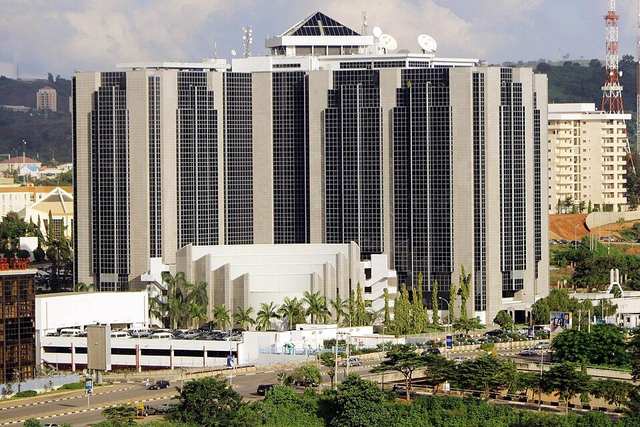
Central Bank of Nigeria headquarters in Abuja
Photo: GodwinPaya / Wikimedia Commons (CC BY-SA 4.0)

CBN warns banks to store payment data in Nigeria by January 2027

The Central Bank of Nigeria says banks and other regulated firms must store critical payment data inside the country by 1 January 2027, and that the deadline will not move. Firms that fail to comply face sanctions.

Read more

The Central Bank of Nigeria (CBN) has told banks and other financial institutions that the deadline for keeping critical payment transaction data inside Nigeria remains 1 January 2027.

What happened

The CBN Deputy Governor for Financial System Stability, Lamido Abubakar Yuguda, gave the warning at a regulatory meeting in Lagos organised with the National Information Technology Development Agency (NITDA), reported on Thursday, 29 October 2026. He said the date had not changed and that institutions that break the rule would face sanctions. Deliberate attempts to frustrate the policy would not be tolerated, he added.

Why the rule exists

The CBN says storing payment data in the country will improve supervision, make the financial system more resilient and protect sensitive customer information, as more Nigerians rely on mobile apps, online banking and fintech services. The meeting focused on the National Sovereign Cloud Initiative, which aims to keep government and critical data on infrastructure within Nigeria.

What banks must do

Yuguda reportedly stressed that simply moving data into the country will not make it safe. Banks must also improve their cybersecurity, plans for keeping services running during outages, disaster recovery and risk management. They will remain responsible for risks linked to cloud providers and other technology partners.

What it means for customers

For ordinary customers, the change should be mostly invisible, but the regulator says it should make it harder for sensitive financial data to be exposed and easier for authorities to investigate fraud.

Naija news
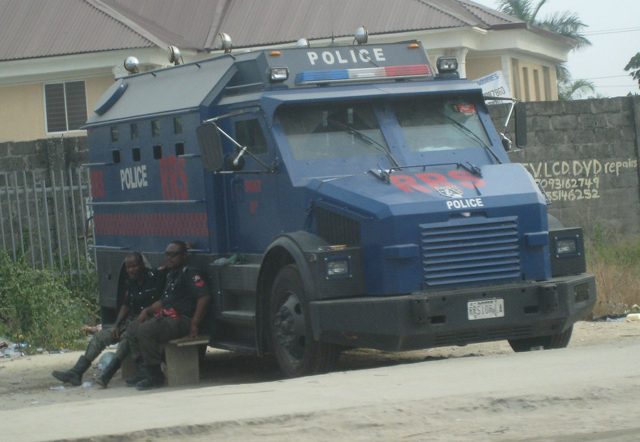
A Nigeria Police armoured vehicle
Stock image: theglobalpanorama / Flickr, CC BY-SA 2.0

State police moves closer as 30 state assemblies reportedly back constitution change

Thirty state Houses of Assembly have now approved the constitutional amendment that would allow states to set up their own police, according to Chief of Staff Femi Gbajabiamila. That is well above the 24 needed, and the bill now goes back to the National Assembly before it can be sent to President Tinubu for assent.

Read more

The plan to allow Nigerian states to run their own police forces has crossed a major hurdle. Femi Gbajabiamila, Chief of Staff to the President and chairman of the Presidential Working Group on the reform, said 30 state Houses of Assembly have now endorsed the constitutional amendment, comfortably above the 24 required.

What happened

Gbajabiamila gave the update at the Nigerian Economic Summit in Abuja. He said 24 assemblies had approved the proposal by 23 October, and six more have since joined. Lagos, Niger, Kogi and Ebonyi were among the latest to vote in favour. A full list of the 30 states has not been published.

What happens next

The National Assembly must now collect the state resolutions and send the amendment bill to President Bola Tinubu for his signature. Separately, a draft National Policing Bill and 29 related amendment bills were sent to the Ministry of Justice on 19 October for review. After that review they will go to the President and then to the National Assembly.

The money question

Gbajabiamila stressed that states wanting their own police must show they can pay for it over time, including salaries, training and maintenance, and not just vehicles and equipment. States that are not ready will continue to rely on federal policing. He asked business groups to suggest ways of supporting funding, but warned that private donations must never buy influence over an investigation. Responding to fears that governors could misuse state police against opponents, he said a citizen's right to protection must not depend on who they support or where they come from.

Background

Calls for state police have grown for years amid kidnapping, banditry and communal attacks in many parts of the country. Senate President Godswill Akpabio also defended the reform this week. Earlier in October, only a handful of assemblies had voted, which made the recent rush of approvals a surprise to many observers.

Naija newsReported
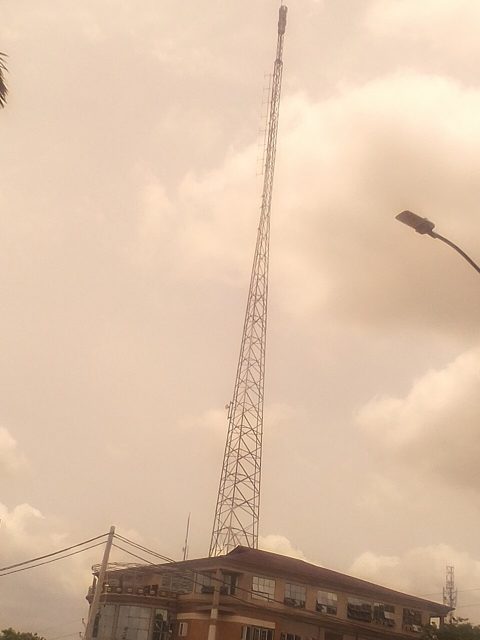
A telecom mast above a building in Nigeria
Stock image: Rotimi8 / Wikimedia Commons, CC BY-SA 4.0

Reps threaten arrest warrants for MTN, Airtel and Glo bosses over poor network

A House of Representatives committee investigating poor telecom services says the heads of MTN, Airtel, Globacom and other operators must appear in person by 4 November or face arrest warrants. Lawmakers rejected a request for an industry body to speak on their behalf.

Read more

The House of Representatives has threatened to issue arrest warrants against the chief executives of Nigeria's major telecom companies if they fail to appear before a committee investigating poor network services.

What happened

The ad hoc committee, chaired by Olumide Osoba of Ogun State, invited MTN Nigeria, Airtel Nigeria, Globacom, Mafab Communications and other licensed operators to explain persistent dropped calls, slow internet, failed airtime and data purchases, and poor coverage in many communities. When the companies again failed to send their top executives, lawmakers adjourned the hearing to 4 November 2026 and insisted the chief executives appear in person.

What lawmakers said

Lawmaker Sunday Umeha said the committee had considered seeking arrests at an earlier sitting but decided to give the executives another chance. He noted that invitations had been sent directly to the CEOs through the Nigerian Communications Commission (NCC), and a representative of the regulator confirmed this at the hearing. The committee also rejected a request for the chairman of the Association of Licensed Telecommunications Operators of Nigeria (ALTON), Gbenga Adebayo, to speak for the companies. Umeha's motion requiring each CEO to appear was adopted by voice vote.

Background

Complaints about network quality have grown since telecom tariffs went up last year, with many subscribers saying they now pay more for worse service. Operators have blamed vandalism of fibre cables, power supply problems and the high cost of running sites.

What happens next

If the CEOs do not appear on 4 November, the committee says it will seek warrants to compel their attendance.

Naija newsReported
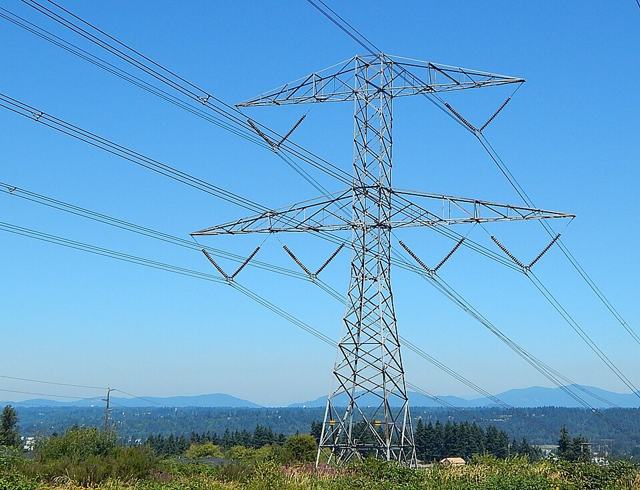
A high-voltage transmission tower and power lines
Stock image: Ron Clausen / Wikimedia Commons, CC0

FEC approves East and West super grids to lift power transmission to 19,000MW

The Federal Executive Council has approved procurement for new East and West super grids, which the Minister of Power says should raise transmission capacity from about 5,000MW to 19,000MW within two years. Tinubu has also ordered the clearing of more than 300 containers of power equipment stuck at the ports.

Read more

The Federal Government has approved the start of procurement for two new high-capacity power lines, known as the East and West super grids, in a bid to fix the weak transmission network that stops much of Nigeria's electricity from reaching homes and businesses.

What happened

The decision was taken at the Federal Executive Council meeting chaired by President Bola Tinubu in Abuja on Wednesday, 28 October 2026. Minister of Power Joseph Tegbe told State House correspondents that the goal is to raise transmission capacity from about 5,000MW to 19,000MW within two years. He said Nigeria already has more than 13,000MW of available generation, but much of it is stranded because the grid cannot carry it.

The routes

The corridors are planned to run from Sokoto through Abuja into parts of the South. The government will start with the Lagos–Ogun, Benin–Port Harcourt and Abuja–Kaduna–Kano corridors. Tegbe said Lagos and Ogun alone account for about half of national electricity demand. The council also approved new transformers for the Ikeja West substation, a new line at the Katampe substation in Abuja and the upgrade of the Itumola–Shagamu line. The cost of the projects was not disclosed.

Other measures

Tegbe said a four-week technical audit is under way to make sure money goes to projects with real impact. The government has paid ₦1.23 trillion of about ₦3.3 trillion owed to gas suppliers and other power-sector players. Tinubu also ordered the ports and customs to clear more than 300 containers of electricity equipment, some of which have been stuck for up to 20 years. Work has started on a new National Control Centre in Osogbo to replace a facility that is 64 years old.

What happens next

Nigerians, used to frequent grid collapses, will be watching for results. The minister said the Lagos and Ikeja projects would show quickly whether power reaches consumers.