Naija & Western gistNews · Celebs · Trends

Trend Naija

Home › Naija news

Naija news
Reported

FG announces ₦50,000 monthly cash relief for vulnerable households
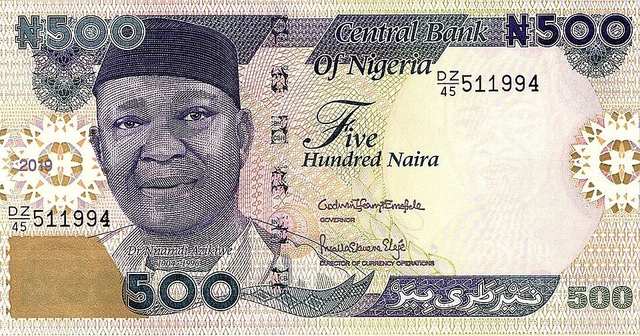
A Nigerian 500 naira note
Photo: CBN / Wikimedia Commons (Public domain)

The Federal Government has unveiled a new monthly cash transfer of ₦50,000 for vulnerable Nigerian households, as part of efforts to ease the pressure of high living costs.

What was announced

The Minister of Humanitarian Affairs and Poverty Reduction, Dr Bernard Doro, announced the National Emergency Relief and Stabilisation Intervention (NERSI) in Abuja on Friday, 30 October 2026, describing it as a presidential initiative. He said the programme would reach millions of Nigerians, although the exact number of beneficiaries and how long the scheme will last were not given. The amount could be reviewed over time in line with the cost of living.

How it will work

Officials reportedly said beneficiaries do not need to apply, pay any fee or register through agents. Payments will be made through licensed digital financial service providers. Each beneficiary will first receive a text message asking for their consent before money is sent to their bank account or mobile wallet. The ministry warned people never to share their PIN or Bank Verification Number with anyone, and provided an official helpline for complaints.

Background

The announcement follows the government's recent approval of a ₦70,000 monthly transport allowance for federal workers, which labour unions are divided over, and comes as opposition parties attack the government over the cost of living ahead of the January 2027 elections. Previous cash transfer schemes have faced complaints about who was selected and about fraudsters pretending to register people.

What to watch out for

Nigerians are being urged to be wary of anyone asking for money or personal details to 'enrol' them in the scheme, as officials say no such registration is needed.

More gist

Naija newsReported
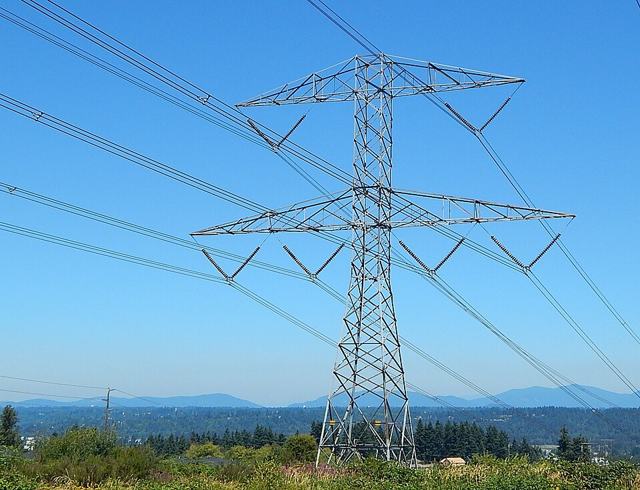
A high-voltage transmission tower and power lines (stock image)
Stock image: Ron Clausen / Wikimedia Commons, CC0

FG targets 70,000MW of electricity by 2060, eyes 21 dams for hydropower

Power Minister Joseph Tegbe says the Federal Government aims to generate 70,000 megawatts of electricity by 2060, and has identified 21 dams along the Sokoto–Badagry corridor for possible hydropower. Nigeria currently generates under 5,000MW despite installed capacity above 13,000MW.

Read more

The Federal Government has set a long-term target of generating 70,000 megawatts of electricity by 2060, the Minister of Power, Joseph Tegbe, has reportedly said.

What he said

Speaking at the Nigeria Energy Leadership Summit in Lagos, in comments reported on Friday, 30 October 2026, Tegbe acknowledged the gap between today's supply and the target. He said Nigeria has more than 13,000MW of installed capacity, but actual generation is below 5,000MW. He linked the need for much more power to growing demand from industry, technology and data centres.

The 21 dams

Tegbe said 21 dams along the route of the Sokoto–Badagry Superhighway have been identified for possible hydropower development, and that President Bola Tinubu has directed that they be rehabilitated and studied for electricity generation. He also mentioned the long-delayed Mambilla hydropower project and the proposed East and West super grids approved by the Federal Executive Council this week. No cost figures were given.

Background

Earlier this week, the Federal Executive Council approved procurement for new super grids meant to raise transmission capacity from about 5,000MW to 19,000MW within two years. The government has also ordered the clearing of hundreds of containers of power equipment stuck at the ports. Frequent grid collapses and poor supply remain one of the biggest complaints of Nigerians and businesses.

What it means

The 2060 target is a long-range goal, and experts say steady progress on transmission and gas supply will be needed long before new dams can make a difference.

Naija newsReported
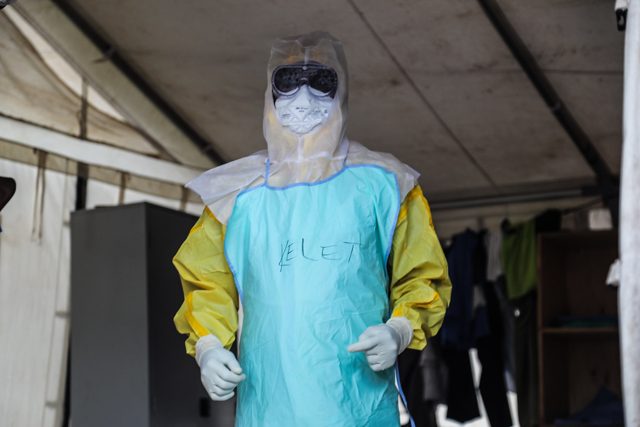
A health worker in a protective suit (stock image)
Stock image: DFID / Flickr, CC BY 2.0

Africa CDC warns continent is 'not winning' as Ebola cases pass 10,000

Africa CDC chief Jean Kaseya has reportedly warned that Africa is not winning the fight against Ebola, with more than 10,000 confirmed cases and nearly 5,000 deaths, mostly in the DR Congo. Nigeria has recorded one imported case, and 54 contacts are being monitored.

Read more

The head of the Africa Centres for Disease Control and Prevention (Africa CDC), Jean Kaseya, has warned that the continent is not winning the battle against the current Ebola outbreak, as confirmed cases passed 10,000.

The numbers

According to World Health Organization figures reported on Friday, 30 October 2026, there have been 10,172 confirmed cases and 4,932 deaths across five countries. The Democratic Republic of Congo, where the outbreak was declared in May, accounts for almost all of them, with more than 10,100 cases across eight provinces. Uganda has recorded 20 confirmed cases and two deaths, Kenya nine cases and two deaths, while France and Nigeria have each recorded one imported case with no deaths.

Nigeria's case

Nigeria's case involved a person who had recently travelled to Uganda and tested positive on 20 October. The patient was evacuated to Switzerland for specialist care, and the Nigeria Centre for Disease Control and Prevention is monitoring 54 contacts.

What was agreed

Speaking at an emergency meeting of African health ministers, Kaseya reportedly said that Ebola anywhere in Africa demands preparedness everywhere in Africa. Ministers agreed to improve readiness for imported cases, coordinate surveillance across borders and keep trade routes open while tightening health checks. The outbreak is caused by the Bundibugyo strain of the virus.

Background

Kaseya recalled the 2014–2016 West Africa epidemic, which disrupted the education of millions of children, left about 23,000 children without a parent and cost close to $3 billion in lost economic output. Nigeria contained an outbreak in 2014 through rapid contact tracing, which is again being used now.

What it means

Health officials are urging Nigerians to report symptoms such as fever, weakness and bleeding promptly, and to follow advice on hand-washing and safe care of the sick.

Naija newsReported
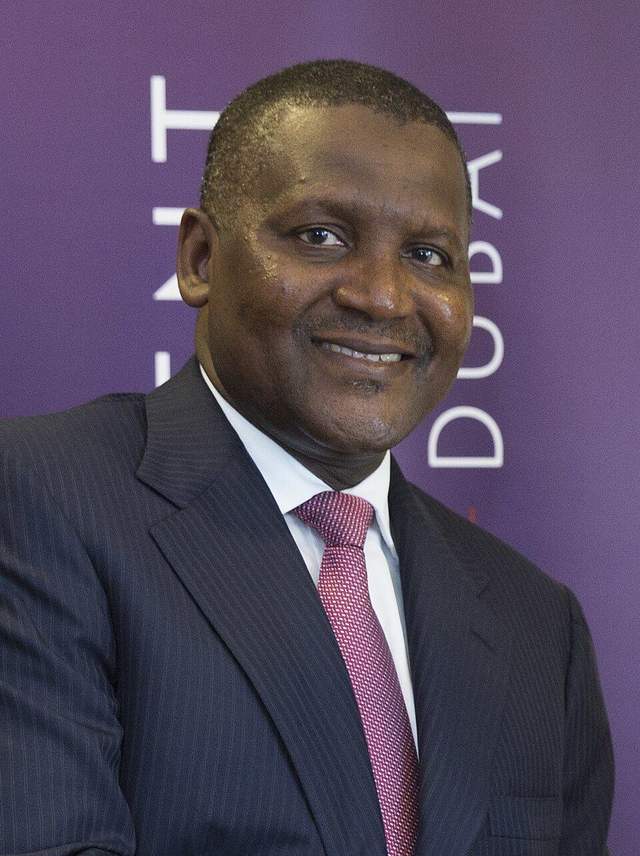
Aliko Dangote in a dark suit
Photo: Saba Dubai / Wikimedia Commons (CC BY 3.0)

Dangote cuts petrol depot price to ₦1,290 as other marketers also reduce rates

The Dangote Refinery has cut its petrol depot price in Lagos by ₦18 to ₦1,290 per litre, the lowest among major depots. Other depot owners in Lagos, Port Harcourt and Calabar have also reduced their prices.

Read more

Petrol depot prices are falling across Nigeria, with the Dangote Refinery now selling at the lowest rate among major depots in Lagos.

The new prices

According to depot price data for Thursday, 29 October 2026, Dangote reduced its petrol price from ₦1,308 to ₦1,290 per litre, a cut of ₦18. Other Lagos depots followed with smaller reductions: Pinnacle and Rainoil now sell at about ₦1,300, African Terminal at about ₦1,307, and MRS and NIPCO at about ₦1,310. In Port Harcourt, several depots cut their prices to about ₦1,325, while depots in Calabar sell at between ₦1,330 and ₦1,335.

Diesel prices

The petrol cut came shortly after Dangote raised its diesel gantry price to ₦1,840 per litre. Some Lagos depots have since undercut that price, selling diesel at about ₦1,825.

What it means for motorists

Depot prices are what marketers pay before transporting fuel to filling stations, so the cuts could lead to slightly lower pump prices in the coming days if retailers pass on the savings. However, pump prices also depend on transport costs and each marketer's margins, so the effect may vary from place to place.

Background

Since petrol subsidies were removed in 2023, prices have been set by the market and change often in response to crude oil prices and the exchange rate. The Dangote Refinery, which began selling petrol in 2024, has become a major influence on local prices. Cooking gas and diesel prices have also been rising, putting pressure on households and businesses.

Naija newsReported
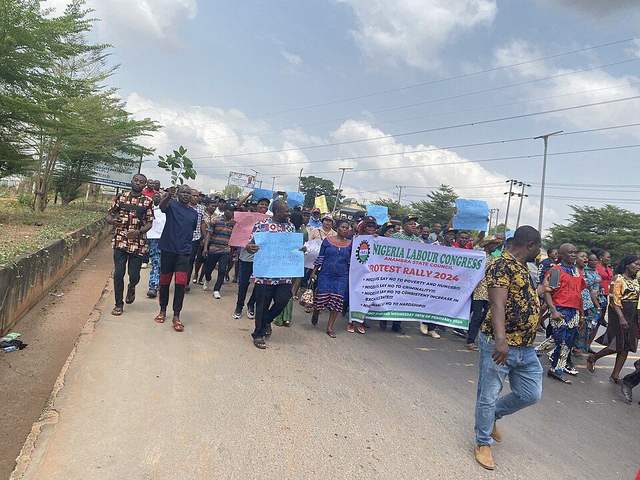
Nigeria Labour Congress members on a protest march
Photo: Altruistic2020 / Wikimedia Commons (CC0)

NLC and TUC clash over Tinubu's ₦70,000 transport allowance

NLC president Joe Ajaero has reportedly criticised the TUC for rejecting the government's ₦70,000 transport allowance, saying it did not take part in negotiating the deal. The TUC has demanded a ₦300,000 minimum wage, while Atiku says the allowance is too small.

Read more

Nigeria's two main labour centres are at odds over the Federal Government's ₦70,000 transport allowance for workers, exposing divisions within organised labour.

What happened

In comments reported on Friday, 30 October 2026, Nigeria Labour Congress (NLC) president Joe Ajaero is said to have rebuked the Trade Union Congress (TUC) for rejecting the allowance. He reportedly argued that the TUC did not sign the agreement and should not oppose something it did not negotiate. Ajaero described the allowance, which the NLC says will last six months, as an important step to help workers cope with higher petrol prices and living costs, and said it could serve as a reference for future negotiations.

The TUC's position

The TUC has rejected the allowance and is reportedly demanding a ₦300,000 national minimum wage instead.

A temporary fix

Ajaero stressed that the allowance is not a permanent solution and warned that the six months must not run out before a new minimum wage framework is agreed. He said future wage talks should take account of transport, food, housing and other basic costs. Earlier this week he said a ₦1 million minimum wage would collapse the economy.

Opposition reaction

ADC presidential candidate Atiku Abubakar has rejected the allowance as far too small, with his campaign questioning what a month's worth of support could buy in fuel. His campaign also said private sector workers, traders and informal workers are left out.

What happens next

Talks on a new minimum wage are expected to continue, and the split between the NLC and TUC could affect labour's bargaining power.