Naija & Western gistNews · Celebs · Trends

Trend Naija

Home › Naija news

Naija news
Reported

EFCC uncovers illegal refinery in Ogun allegedly run by foreign nationals
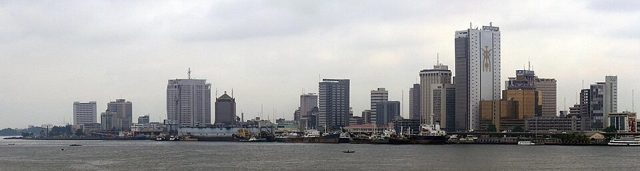
The Lagos skyline seen from the water
Stock image: kopee15 / Wikimedia Commons, Public domain

The Economic and Financial Crimes Commission (EFCC) says it has uncovered an illegal oil refinery in Ogere, Ogun State, allegedly run by Chinese nationals.

The raid

In a statement on Tuesday, 3 November 2026, the EFCC said operatives of its Lagos Zonal Directorate 2 raided the facility on Saturday, 31 October, after intelligence and surveillance of illegal sludge oil processing in the area. The site was empty when officers arrived, but there were signs of recent activity, including underground tanks containing a substance suspected to be diesel.

What investigators found

According to the commission, preliminary investigations showed that the operators sourced sludge oil from Delta and Rivers states and brought it to the Ogere site for processing. The EFCC said it has taken over the site and is investigating the operators, the owner of the property and possible economic sabotage. No arrests were announced.

Background

Illegal refining is a major problem in Nigeria, especially in the Niger Delta, where crude oil is stolen from pipelines and processed in makeshift refineries. The practice causes huge losses to the country, pollutes land and water, and has led to deadly fires. Security agencies say illegal refining has also spread to other parts of the country. The government has stepped up efforts against oil theft.

What happens next

The EFCC says investigations are continuing and suspects will be prosecuted if found.

More gist

Naija newsReported
A Nigerian 500 naira note
Photo: CBN / Wikimedia Commons (Public domain)

Naira weakens in October as dollar demand outstrips CBN's $1.98bn intervention

The naira lost about 1.3% against the dollar in October, ending three months of gains, as festive-season demand and dollar shortages pressured the market. The CBN injected nearly $2 billion but reportedly met demand fully in only two of five interventions.

Read more

Nigeria's currency has come under fresh pressure as businesses scramble for dollars ahead of the festive season, according to market data reported on Tuesday, 3 November 2026.

The numbers

The naira closed October at ₦1,346.91 per dollar on the official market, compared with ₦1,329.50 at the end of September, a fall of about 1.31 per cent. It was the first monthly decline after three consecutive months of gains. The Central Bank of Nigeria (CBN) reportedly injected about $1.98 billion into the market during the month, but demand was fully met in only two of its five interventions.

Why it is happening

Importers, manufacturers and traders typically need more foreign currency towards the end of the year to bring in goods for Christmas and New Year sales. Analysts say this seasonal demand, combined with limited dollar inflows, is putting pressure on the naira.

What it means

A weaker naira raises the cost of imported goods and raw materials, which can push up prices for consumers. The CBN says stronger dollar inflows from oil exports, foreign investment and remittances are key to keeping the currency stable.

Background

The naira has been more stable in recent months after sharp falls in 2023 and 2024 following the unification of exchange rates. Foreign reserves have risen to their highest level in years, and inflation has fallen. The government points to these gains as evidence that its reforms are working, while critics say ordinary Nigerians are still struggling with high prices.

Naija newsReported
Aliko Dangote in a dark suit
Photo: Saba Dubai / Wikimedia Commons (CC BY 3.0)

Cooking gas depot prices jump by up to 16% in three days

Cooking gas prices at major Lagos depots reportedly rose by between ₦140 and ₦200 per kilogram between 30 October and 2 November. Navgas listed the highest price at ₦1,450 per kg, while Dangote had the lowest at ₦1,050.

Read more

Nigerians are facing higher cooking gas costs after depot prices at major suppliers in Lagos rose sharply in just three days, according to a price review published on Monday, 2 November 2026.

The new prices

All five monitored Lagos depots reportedly raised their prices between 30 October and 2 November, with increases of ₦140 to ₦200 per kilogram. Navgas recorded the steepest rise, from ₦1,250 to ₦1,450 per kg, an increase of 16 per cent. 11Plc and Nipco both moved from ₦1,225 to ₦1,390 per kg, while Techno Oil and Rain Oil went from ₦1,200 to ₦1,370 per kg. Dangote's depot price was the lowest among those monitored, at ₦1,050 per kg.

What it means for households

Depot prices feed directly into what retailers charge for refilling cylinders, so consumers are likely to pay more in the coming days. A 12.5kg cylinder, the size used by many families, could cost roughly ₦2,000 more to refill at these depot rates. Clean cooking advocates warned that rising gas costs are pushing some households back to firewood and charcoal, which are cheaper but cause indoor air pollution and deforestation.

Background

Cooking gas prices in Nigeria have been volatile over the past two years, affected by exchange rates, supply problems and international prices. The government has encouraged wider use of liquefied petroleum gas as a cleaner alternative to kerosene and firewood. The Dangote refinery has also become a major supplier, and its prices have often been lower than those of other depots.

What happens next

Marketers say prices will depend on supply and global market conditions in the coming weeks.

Naija newsReported
The Lagos skyline seen from the water
Stock image: kopee15 / Wikimedia Commons, Public domain

Atedo Peterside says Tinubu's reforms are making the rich richer and the poor poorer

Investment banker Atedo Peterside has reportedly said the government's economic reforms are benefiting wealthier Nigerians with investments while low-income workers are worse off. He said his concern is for the more than 130 million Nigerians who are poor.

Read more

Investment banker and IBTC founder Atedo Peterside says the Tinubu administration's economic reforms are widening the gap between rich and poor Nigerians.

What he said

Speaking in a television interview on Monday night, 2 November 2026, Peterside reportedly said that whether the reforms are working depends on who is asked. He said upper-middle-class Nigerians with investments in the stock market are probably better off than they were three years ago, while low-income workers with little savings who struggle to eat two meals a day and pay their bills are a lot worse off. He admitted that his own investment income had risen, but said his concern was for the 130 to 140 million Nigerians who are poor and getting poorer.

Background

The government removed the petrol subsidy and unified the exchange rate in 2023, moves that pushed up prices but which it says were needed to rescue the economy. Officials point to falling inflation, which dropped to 14.63 per cent in September, rising foreign reserves and a stock market that hit a record high last week. Critics say these gains have not yet reached ordinary households, many of whom still struggle with high food and transport costs.

Political debate

The state of the economy is a central issue in the 2027 campaign. Opposition candidates say the reforms have made life harder, while the government says it is cushioning the poor through cash transfers and credit schemes.

Naija newsReported
The Lagos skyline seen from the water
Stock image: kopee15 / Wikimedia Commons, Public domain

Government opens new round of free vocational training with ₦30,000 monthly stipend

The federal government has reportedly opened applications for Batch C of its TVET initiative, offering free training in trades such as solar installation, plumbing and fashion design, plus a ₦30,000 monthly stipend. Applications are free on the official portal.

Read more

The federal government has opened applications for the third batch of its Technical and Vocational Education and Training (TVET) initiative, which offers free skills training and a monthly stipend, according to reports on Monday, 2 November 2026.

What is on offer

The programme, coordinated by the Federal Ministry of Education, provides free vocational training at accredited technical colleges, government institutions and registered private centres across the country. Participants receive ₦30,000 a month throughout their training. Trades on offer reportedly include solar installation, plumbing, fashion design and car repairs.

Two training options

Applicants can choose a six-month short-term certificate course aimed at beginners, school leavers and people without formal qualifications, or a one-year vocational education and innovation course for those with previous education or informal training in a trade.

How to apply

Applications are free and are made through the official TVET portal. No closing date has been announced, so applicants are advised to watch for official updates and to avoid anyone asking for money to register.

Background

The initiative was launched to tackle youth unemployment and the country's skills gap by training young Nigerians in practical trades that are in demand. Earlier batches attracted large numbers of applicants. The scheme is one of several government programmes aimed at easing hardship, alongside cash transfers and consumer credit.