Naija & Western gistNews · Celebs · Trends

Trend Naija

Home › 2027 elections

2027 elections

BREAKING: Court sacks Uzodimma as APC senatorial candidate for Imo West, orders INEC to recognise Okorocha

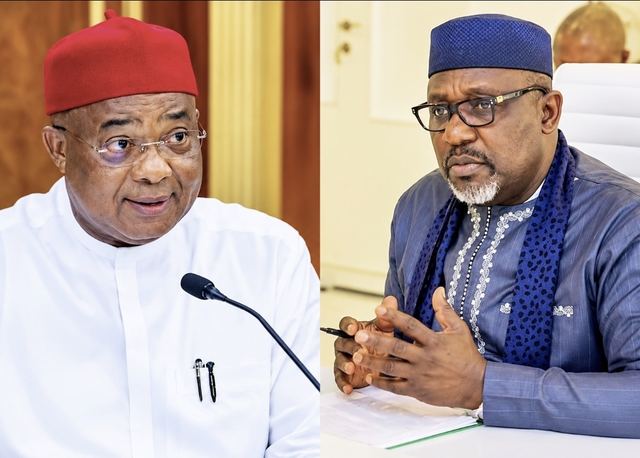
Side-by-side photos of Imo Governor Hope Uzodimma in a red cap and former governor Rochas Okorocha in a blue cap
Image: social media

The political battle in Imo State has taken a dramatic turn after a Federal High Court in Abuja ruled that Governor Hope Uzodimma is not the All Progressives Congress (APC) candidate for the Imo West senatorial seat.

In a judgment delivered on Thursday, Justice Obiora Egwuatu held that Uzodimma did not win the party's May 18 primary for Imo West and that former governor Rochas Okorocha polled the highest votes. The court ordered INEC to recognise Okorocha and publish his name as the APC's candidate, and barred Uzodimma from presenting himself as the party's candidate.

Okorocha filed the suit in August, arguing that INEC's own monitors' reports showed him as the winner of the primary. His camp says he scored 150,780 votes to Uzodimma's 102,158, while the party's returning officer had declared Uzodimma the winner with 230,464 votes. Uzodimma and the APC had asked the court to throw out the case as filed too late.

It is not yet known whether Uzodimma or the APC will appeal.

The ruling raises fresh questions about the balance of power within Imo APC. It comes amid growing political tension involving Governor Uzodimma and FCT Minister Nyesom Wike over cross-party alliances and control of party structures ahead of the 2027 elections. However, there is no evidence that Wike had anything to do with the court's decision.

Is Hope Uzodimma gradually losing his grip on Imo politics, or is this just a temporary setback in the battle for 2027?

More gist

2027 electionsReported
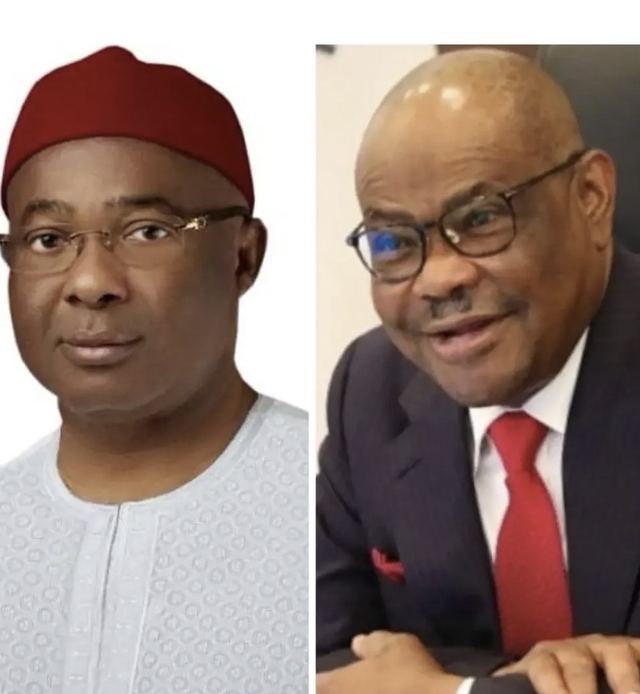
Side-by-side portraits of Imo Governor Hope Uzodimma in a red cap and FCT Minister Nyesom Wike in a suit and red tie
Image: social media

Uzodimma vs Wike? Imo governor rejects Rainbow Coalition, threatens to take back vehicles from APC members who work against the party

Imo Governor Hope Uzodimma has reportedly declared there will be "no Rainbow Coalition in Imo State", warning APC members that he will take back vehicles donated by Tompolo from anyone who works outside the party. The remarks are being read as a message to Nyesom Wike's cross-party allies ahead of 2027.

Read more

Political tension appears to be brewing in Imo State as Governor Hope Uzodimma sends a strong warning to members of the All Progressives Congress (APC), declaring that there is no room for a Rainbow Coalition in the state.

In remarks attributed to the governor, Uzodimma warned APC members against working outside the party's political structure, insisting that loyalty to the APC must remain their priority.

The governor reportedly went further by threatening to withdraw vehicles donated by Niger Delta leader High Chief Government Ekpemupolo, popularly known as Tompolo, from beneficiaries found supporting political arrangements outside the APC.

"No Rainbow Coalition in Imo State. If I see you work outside the APC party, I'll take the vehicles from you," Uzodimma was quoted as saying.

The governor also expressed appreciation to Tompolo for his generosity and pledged his support whenever the Niger Delta leader needed assistance in Imo State.

"I am very grateful to High Chief Tompolo. Anytime you need us in Imo State, let us know and we'll be there for you," he reportedly added.

Is Uzodimma drawing a political battle line against Wike?

The governor's reported declaration has raised questions about the political influence of the Minister of the Federal Capital Territory, Nyesom Wike, whose name has become associated with cross-party political alliances.

Wike, although a member of the Peoples Democratic Party (PDP), serves in President Bola Tinubu's APC-led administration and has maintained political relationships across party lines. His political approach has often involved cooperation between politicians belonging to different parties, particularly in Rivers State.

However, Uzodimma's reported warning suggests that he is unwilling to accommodate a similar arrangement within the Imo APC.

Although the remarks could be interpreted as a message to Wike's political allies, they do not, on their own, establish that the two politicians are in a direct confrontation.

Questions over Tompolo's donated vehicles

Another interesting aspect of the governor's reported statement is his warning about withdrawing vehicles donated by Tompolo.

The remarks raise questions about whether the vehicles were intended as unconditional gifts or whether their continued use is tied to political loyalty. It also remains unclear what authority would govern the withdrawal of the vehicles from beneficiaries.

What does this mean for Imo politics?

With political calculations already taking shape ahead of the 2027 general elections, Uzodimma's reported position could signal an attempt to strengthen party discipline and prevent competing political alliances from gaining influence within the state.

For now, the bigger question is whether the governor's declaration is simply an internal warning to APC members or the beginning of a wider struggle over political influence.

One thing is certain: if these remarks are accurately reported, Governor Hope Uzodimma has made his position clear. He expects APC members in Imo State to remain loyal to the party.

But should vehicles donated to politicians be withdrawn simply because the beneficiaries choose to support a different political alliance? And could this be the beginning of a political disagreement between Uzodimma and Wike ahead of 2027?
2027 electionsReported
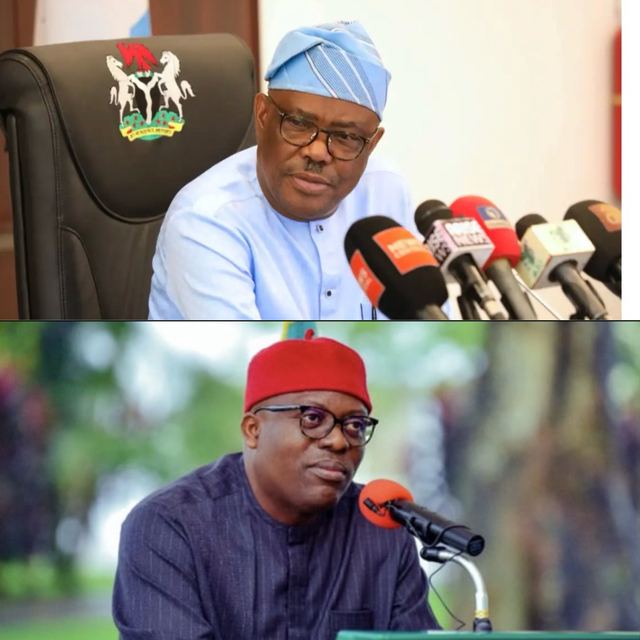
Nyesom Wike speaking at a news conference, above Governor Siminalayi Fubara in a red cap speaking into a microphone
Image: social media

Rivers politics: Fubara backs Wike's cross-party Rainbow Coalition and its 2027 candidates

Governor Siminalayi Fubara has publicly pledged support for President Tinubu, Nyesom Wike and the seven-party Rainbow Coalition, which has unveiled Kingsley Chinda and Major Jack of the APC as its governorship ticket. The move shows the former rivals now campaigning in the same bloc, though a court challenge to Chinda's eligibility is still pending.

Read more

Governor Siminalayi Fubara has publicly pledged support for President Tinubu, Nyesom Wike and the Rainbow Coalition's 2027 candidates in Rivers State. The seven-party alliance unveiled Kingsley Chinda and Major Jack, both of the APC, as its governorship and deputy governorship choices. The rest of its slate combines APC and PDP candidates.

Why it is trending

"Rainbow Coalition" entered Nigeria's trending topics on X. The unveiling confirms that Fubara and Wike are now openly campaigning within the same political bloc after their long-running disagreement.

What has changed

The reconciliation has moved from meetings and public statements to a jointly supported electoral slate. The coalition adopted:

Kingsley Chinda and Major Jack for governor and deputy governor.

Two APC and one PDP senatorial candidates.

Ten APC and three PDP House of Representatives candidates.

Twenty-one APC and eleven PDP State Assembly candidates.

Still uncertain

A court challenge to Chinda's eligibility remains unresolved, with a hearing reportedly scheduled for 4 November 2026. The September Supreme Court decision at the centre of the dispute did not specifically disqualify Chinda, and rival groups disagree over what it means. The coalition's endorsement therefore does not settle the pending legal question.

2027 elections
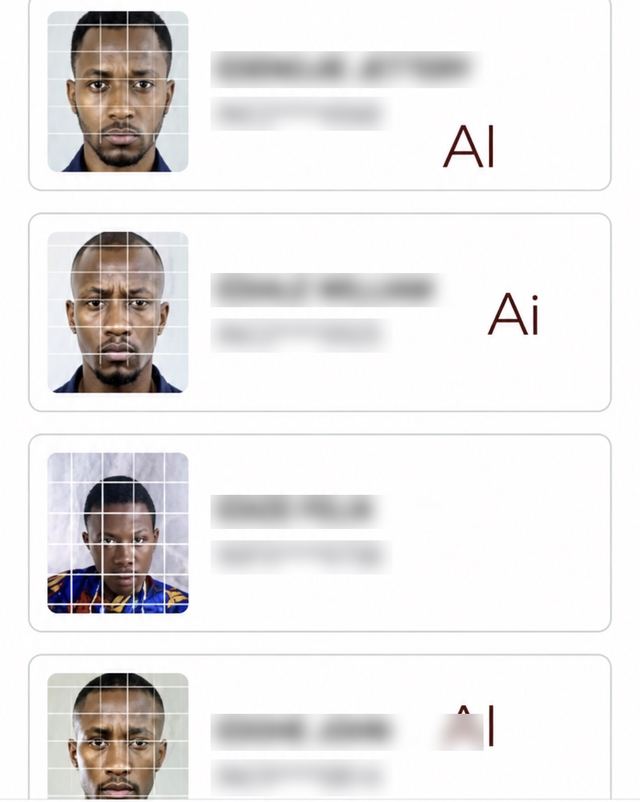
Screenshot of four voter register entries with passport photos marked "AI"; names and numbers blurred by Trend Naija
Image: social media (names blurred by Trend Naija)

INEC under fire over alleged AI-generated images in voter register as concerns grow over Nigeria's democracy

INEC is facing criticism after users shared screenshots of entries in the newly published preliminary voter register, mainly from Edo State, whose photos they say appear to be AI-generated. Pat Utomi has asked the commission to explain, and some users also allege duplicate entries. INEC had not publicly responded to the claims, which have not been independently verified.

Read more

Fresh concerns have emerged over the credibility of Nigeria's Independent National Electoral Commission (INEC) following allegations that AI-generated images were found in the preliminary voter register, raising serious questions about the integrity of the country's electoral system.

The claims surfaced after INEC uploaded the preliminary register online, with users sharing screenshots of entries from several polling units in Edo State whose photographs they say look artificially generated. Some users have also alleged duplicate entries with the same photograph under different voter numbers. Economist and politician Pat Utomi has publicly asked INEC to explain the images. INEC had not publicly responded to the specific allegations at the time of writing.

The allegations have sparked concerns about the effectiveness of INEC's verification procedures, transparency and accountability, particularly as Nigeria prepares for future elections.

For an institution entrusted with protecting the voting rights of millions of Nigerians, the possibility of AI-generated photographs appearing in an official electoral database is a matter that deserves urgent investigation.

If confirmed, such irregularities could expose serious weaknesses in the processes used to register voters, authenticate their identities and maintain accurate electoral records.

How can Nigerians trust an electoral system if the authenticity of the photographs and identities contained in its register cannot be guaranteed?

INEC has a constitutional responsibility to conduct credible elections and maintain a reliable register of eligible voters. Any failure to detect manipulated images or questionable registrations could further weaken public confidence in an institution that has faced criticism over previous electoral exercises.

The growing sophistication of artificial intelligence also presents new challenges for electoral authorities worldwide. Images that appear genuine can now be generated or manipulated using readily available technology, making strong identity verification procedures increasingly important.

However, the existence of suspicious images alone would not establish electoral fraud. A proper investigation would need to determine whether the photographs were genuinely AI-generated, how they entered the register and whether they were connected to valid voter records.

Nigerians deserve clear answers from INEC. The commission should establish the facts, explain its verification procedures and disclose what safeguards are in place to prevent fraudulent registrations and manipulation of electoral information.

Where wrongdoing is established, those responsible should be identified and held accountable under the law.

Nigeria cannot afford another election overshadowed by doubts about the credibility of the electoral process. Democracy depends on public confidence that every legitimate vote will count and that electoral institutions can protect the integrity of the process.

With the 2027 general elections approaching, INEC must demonstrate that its systems are secure, its records are reliable and its operations are open to independent scrutiny.

The credibility of Nigeria's democracy is too important to be left to assumptions, political assurances or unanswered allegations.

The question Nigerians are asking is simple: if INEC cannot guarantee the authenticity of the identities in its electoral register, how can citizens be confident that it will deliver free, fair and credible elections in 2027?