Naija & Western gistNews · Celebs · Trends

Trend Naija

Home › Naija news

Naija news
Reported

Government credit agency launches SPARK scheme for buying food and solar on credit

A Nigerian 500 naira note
Photo: CBN / Wikimedia Commons (Public domain)

The Nigerian Consumer Credit Corporation (CREDICORP), a federal government agency, has launched a new scheme called SPARK to help Nigerians buy essential goods on credit, according to reports on Monday, 2 November 2026.

What SPARK offers

The scheme is designed to let people buy items such as food, solar power systems and other household needs without paying the full amount upfront. It also aims to support Nigerian businesses and manufacturers by boosting demand for locally made goods. Reports say Nigerians will be able to access the service through a USSD code, which works on basic phones without internet access.

The numbers so far

CREDICORP says it has facilitated more than ₦53.5 billion in consumer credit for over 351,000 Nigerians since it began operations, and that women make up about 59 per cent of beneficiaries.

A loan, not a grant

Applicants are being reminded that SPARK is a loan that must be repaid, not free money. People are advised to check the official terms, use only official channels and beware of fraudsters who may pretend to offer access to the scheme for a fee.

Background

CREDICORP was set up in 2024 as part of President Tinubu's plan to make consumer credit more widely available, so that working Nigerians can buy goods such as cars, homes and appliances and pay over time. Critics have questioned how many people can afford new debt at a time of high living costs, while supporters say affordable credit can ease pressure on household budgets.

More gist

Naija news
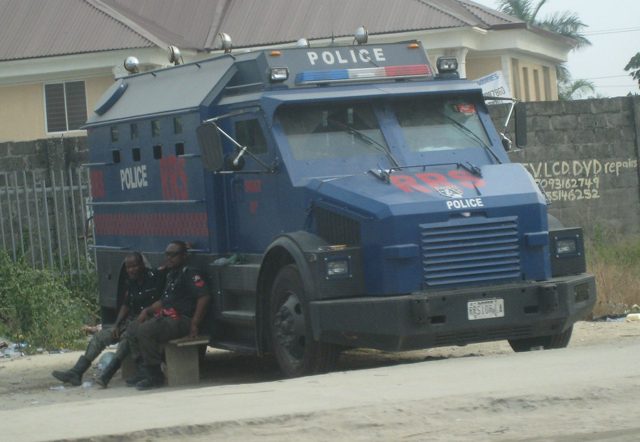
A Nigeria Police armoured vehicle
Stock image: theglobalpanorama / Flickr, CC BY-SA 2.0

Police officers feared dead as bandits ambush bus heading to Zamfara APC primary

Bandits ambushed a bus carrying police officers on the Sokoto–Gusau road in Zamfara State on Monday. The officers were travelling to provide security for an APC senatorial primary, and some are feared dead while others were reportedly abducted.

Read more

Several police officers are feared dead after suspected bandits attacked a bus carrying them along the Sokoto–Gusau road in Zamfara State on Monday, 2 November 2026.

What happened

The officers were travelling in a state mass transit bus, known locally as Bazamfara, towards Gusau, the state capital. According to police sources, they were on their way to provide security for the All Progressives Congress (APC) primary election for the Zamfara North senatorial district, which was taking place in Kaura Namoda Local Government Area. Sources said some officers were killed in the ambush and others were abducted by the attackers. The exact number of casualties had not been confirmed at the time of reporting.

Official response

The spokesman for the police zone covering the area reportedly confirmed the attack, but said he was in hospital and would issue an official statement later. The identities of the victims have not been released.

Background

Zamfara is one of the states worst affected by banditry in north-west Nigeria, with frequent attacks on travellers, villages and security personnel. Police officers are often deployed to provide security at party primaries and campaign events, and several political gatherings have been attacked in recent weeks as the 2027 elections approach. In neighbouring Niger State, gunmen abducted 14 Islamiyya students and their teacher at the weekend.

What happens next

Security agencies are expected to launch an operation to rescue the abducted officers, and the police are expected to release casualty figures.

Naija news
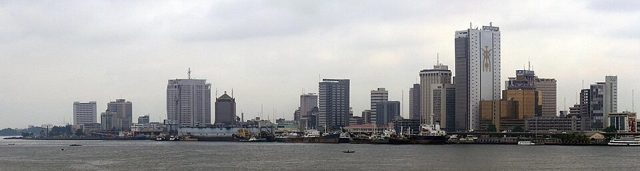
The Lagos skyline seen from the water
Stock image: kopee15 / Wikimedia Commons, Public domain

Gunmen abduct 14 Islamiyya students and their teacher on Niger farm

Police in Niger State say suspected bandits abducted 14 Islamiyya students and their teacher while they were harvesting maize on a farm in Rafi Local Government Area. Police corrected earlier reports that 50 pupils were taken.

Read more

Suspected bandits have abducted 14 students of an Islamic school and their teacher in Rafi Local Government Area of Niger State, police have confirmed.

What happened

The attack happened at about 12.30pm on Saturday, 31 October 2026, in Tungan-Bako village near Pandogari. According to the police, the students were helping their teacher harvest maize on his farm when armed men stormed the area and took them away.

Police statement

The spokesman for the Niger State Police Command, Wasiu Abiodun, confirmed the incident on Monday, 2 November. He said the number of students abducted was 14, correcting earlier reports that about 50 pupils had been seized. He said a joint team of security forces had been deployed to rescue the victims and that further updates would be given.

Background

Rafi and nearby local government areas in Niger State have suffered repeated attacks by armed groups in recent years, including mass abductions from schools and villages. Kidnapping for ransom remains a serious problem across north-west and north-central Nigeria, and farmers are often targeted during the harvest season. On the same day the abduction was confirmed, bandits ambushed a bus carrying police officers in neighbouring Zamfara State.

What happens next

Families and community leaders are calling for the quick and safe release of the students.

Naija newsReported
The Lagos skyline seen from the water
Stock image: kopee15 / Wikimedia Commons, Public domain

Court orders arrest of Lagos NURTW chairman Sego over alleged contempt

The National Industrial Court in Lagos has ordered the arrest of Lagos NURTW chairman Mustapha Adekunle, known as Sego, and the union's secretary, after they failed to appear to explain why they should not be jailed for contempt. The case arises from a dispute with tricycle operators.

Read more

The National Industrial Court in Lagos has ordered the arrest and detention of the Lagos State chairman of the National Union of Road Transport Workers (NURTW), Mustapha Adekunle, popularly known as Sego, and the union's secretary, Usman Teslim.

What the court said

Justice Isaac Essien gave the order on Monday, 2 November 2026, after the two officials failed to appear in court to show why they should not be sent to prison for contempt. According to reports, the judge described their conduct as brazen disobedience of court orders and warned that the authority of the courts must not be undermined. He directed the Lagos Commissioner of Police, the state commandant of the Nigeria Security and Civil Defence Corps and other security agencies to arrest the two men and hand them over to the officer in charge of the Kirikiri Correctional Centre.

Bailiff obstruction

The court also raised concern over an affidavit filed by its bailiff, who said he was prevented from serving court papers on 5 October by a security officer linked to one of the parties in the case. Justice Essien reportedly described the alleged obstruction as a dangerous development.

Background

The case stems from a long-running dispute between commercial tricycle operators and the NURTW in Lagos over control of operations and levies. The union has been at the centre of several leadership and legal battles in the state in recent years. Sego and the union have not publicly responded to the order.

What happens next

The officials can still appear before the court or challenge the order on appeal. It is not yet clear whether security agencies have acted on the directive.

Naija newsReported
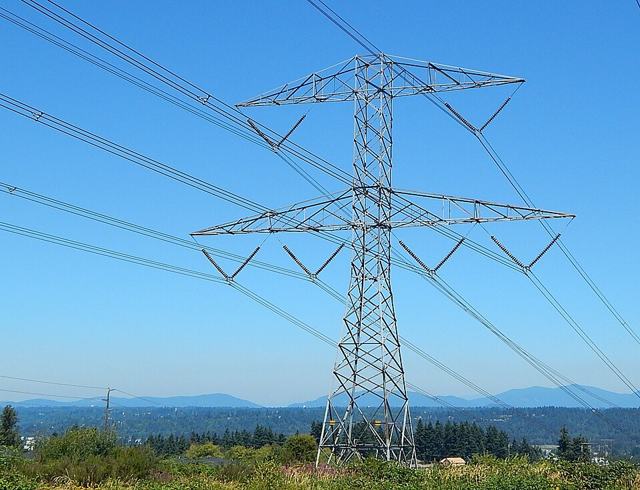
A high-voltage transmission tower and power lines
Stock image: Ron Clausen / Wikimedia Commons, CC0

Rufai Oseni says law letting states run their own electricity will never work

Broadcaster Rufai Oseni has reportedly said states lack the money, gas and grid to generate their own power, arguing that the government should fix the national grid instead.

Read more

Television presenter Rufai Oseni has dismissed the law that allows Nigeria's states to generate and distribute their own electricity, saying it cannot work in practice.

What he said

Speaking on a breakfast television programme on Monday, 2 November 2026, Oseni reportedly said the idea of decentralising power sounds good in theory, but most states lack the money, technical skill and infrastructure to carry it out. He said the power sector needs huge investment, steady gas supply, power plants, transmission lines and working distribution networks, and asked how many states could provide these.

His argument

Oseni noted that the federal government, after running the sector for more than four decades, still struggles to supply a steady 4,000 to 5,000 megawatts to a population of over 200 million, and that the national grid often collapses. He added that many states struggle to pay civil servants and depend on monthly federal allocations, so they cannot be expected to fund power plants costing billions of dollars. He questioned how the country could split supply into 36 centres when it could not provide 24-hour power from one, and urged the government to focus on fixing the grid and gas supply.

Background

The Electricity Act of 2023 allows states to regulate and develop their own electricity markets, and several states, including Lagos, Enugu and Ondo, have set up their own regulators. Supporters of the law say it will attract investment and bring power closer to consumers. Electricity has also become a campaign issue, with opposition candidate Atiku Abubakar accusing President Tinubu of failing to keep his power promises, while the government points to its grid expansion plans.