Naija & Western gistNews · Celebs · Trends

Trend Naija

Home › 2027 elections

2027 elections
Reported

"I established my university before becoming Vice-President": Atiku fires back at Tinubu
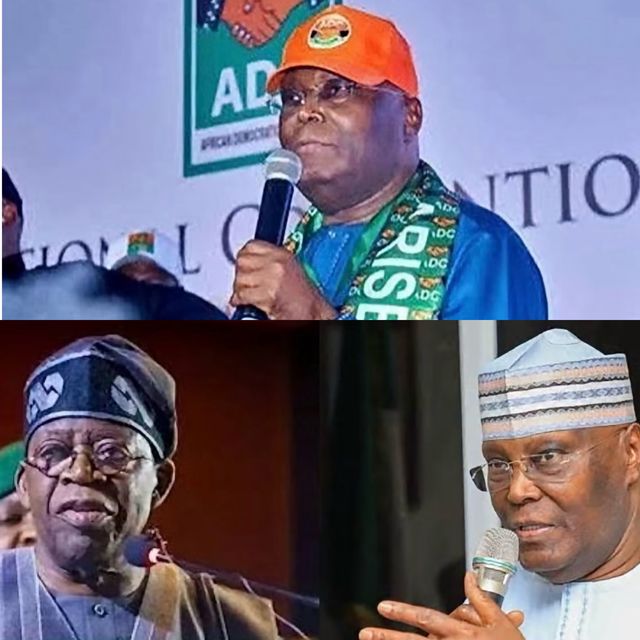
Collage of Atiku Abubakar speaking at an ADC event and President Bola Tinubu
Photo: Trend Naija

Former Vice-President Atiku Abubakar has responded to President Bola Tinubu over questions about his investment in education, insisting that the foundation of his educational institution was laid long before he became Vice-President.

Atiku's response

Atiku, who served as Vice-President from 1999 to 2007, said the suggestion that he established a university with resources acquired while in public office was misleading.

According to him, his journey into education began in 1993, when he established ABTI Academy, six years before he took office as Vice-President under former President Olusegun Obasanjo.

He made the clarification after remarks attributed to President Tinubu questioning how he was able to set up a university while serving in government.

Why the dates matter

Atiku maintained that his investment in education was part of his business activities before he entered the country's second-highest office. By the time he became Vice-President in May 1999, he says, he had already begun building what would eventually grow into a major private institution.

That institution later became the American University of Nigeria (AUN) in Yola, Adamawa State. The university itself was established in the mid-2000s, during his time as Vice-President, which is why questions about its funding and expansion continue to come up.

Atiku also insisted that his business activities and investments are open to public scrutiny, and that anyone genuinely interested in the source and history of his wealth can examine his record.

A growing rivalry

The exchange adds another chapter to the rivalry between President Tinubu and the former Vice-President, two prominent figures whose differences have shaped several national debates.

Beyond the personal disagreement, the controversy raises a question Nigerians have long asked of their leaders: how did those who held public office acquire their wealth, and can they give a clear account of their investments?

The fact that an educational project began before someone took office does not, on its own, settle every question about its funding or later expansion. Those questions would require documentary evidence and a proper look at the institution's financial history.

The road to 2027

As activities ahead of the 2027 general election gather pace, exchanges like this between leading political figures are likely to attract even more attention.

For now, Atiku has made his position clear: his educational investment began in 1993, well before he became Vice-President, and he is prepared to have his business record examined.

Over to you

Should Nigerian politicians be required to publicly explain how they funded their major investments, regardless of when those investments began?

More gist

2027 electionsReported
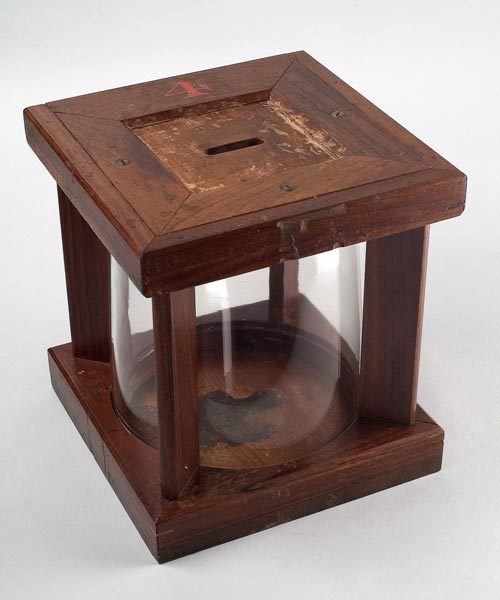
A glass ballot box
Stock image: National Museum of American History / Wikimedia Commons, Public domain

Amaechi warns court ruling against ADC could trigger unrest if mishandled

ADC vice-presidential candidate Rotimi Amaechi has warned that the court judgment removing the party's leadership and voiding Atiku Abubakar's nomination could lead to serious unrest, even civil war, if the dispute is not properly managed.

Read more

Rotimi Amaechi, the vice-presidential candidate of the African Democratic Congress (ADC), has warned that the court ruling against the party's leadership could cause serious unrest if it is not handled carefully.

What he said

In comments reported on Sunday, 8 November 2026, Amaechi said the judgment that nullified the party's leadership and the process that produced Atiku Abubakar as presidential candidate could lead to civil war if the dispute is not properly managed. He did not set out in detail how he believed the crisis should be resolved.

The ruling

On Thursday, Justice Peter Lifu of the Federal High Court in Abuja ruled that the national working committee led by former Senate President David Mark was invalid. The judgment also nullified the emergence of former Interior Minister Rauf Aregbesola as national secretary, and decisions taken by the Mark-led leadership, including the process that produced Atiku as candidate. The court directed INEC not to recognise decisions taken at the party's national executive committee meeting of 27 July 2025. The suit was filed by Nafiu Gombe, a former deputy national chairman of the party.

Background

The ADC has appealed the judgment and asked INEC not to act on it until the appeal is heard. Atiku has vowed to stay in the race and accused the government of using the courts against the opposition. Amaechi, a former Rivers governor and transport minister, this week also said former President Muhammadu Buhari had promised in writing to back him in 2022.

What happens next

Attention is now on the Court of Appeal and on how INEC responds before the presidential election on 16 January 2027.

2027 electionsReported
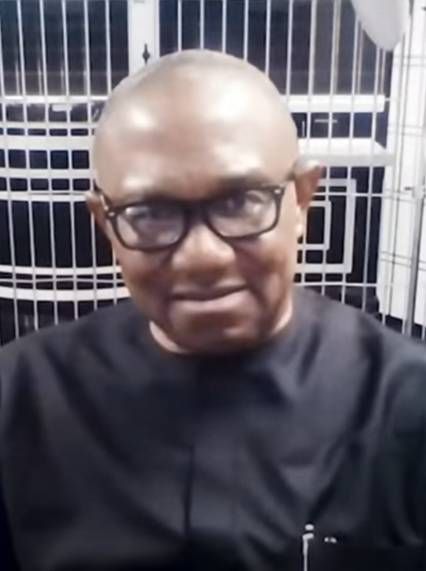
Peter Obi
Photo: VOA / Wikimedia Commons, Public domain

Obi asks Tinubu to account for subsidy savings and over $100bn in loans

NDC candidate Peter Obi has challenged President Tinubu to explain what his government has done with the ₦15.8 trillion reportedly saved from fuel subsidy removal and more than $100 billion in borrowing, a day after Tinubu criticised Obi's record in Anambra.

Read more

Peter Obi, presidential candidate of the Nigeria Democratic Congress (NDC), has called on President Bola Tinubu to account for money saved from the removal of the fuel subsidy and from government borrowing.

What Obi said

In a statement on his X account on Saturday, 7 November 2026, titled 'Good Day, Mr President: Nigerians Deserve Accountability', Obi said the large sums flowing into government coffers, including higher tax revenues, should be producing clear improvements in Nigerians' daily lives. He urged the President to visit the remaining 33 states he has not yet toured, spend time with the people and explain what his administration had done with the ₦15.8 trillion he said had been saved from subsidy removal, the more than $100 billion he said had been borrowed, and increased revenue from taxes.

The background to the exchange

Obi's statement came a day after Tinubu, speaking in Akwa Ibom, criticised the former Anambra governor's record on erosion in the state. At a reception in Uyo the same day, Tinubu said the naira would have become worthless without his reforms and that Nigeria would never go back to the subsidy. Vice-President Kashim Shettima also told an APC rally in Uyo that Obi had run himself out of the race.

The figures

Obi did not give a breakdown of how he arrived at the figures. The World Bank reported this week that Nigeria's total external debt, including private-sector debt, rose to about $145 billion in 2025. The government says its borrowing is needed to fund infrastructure and that its reforms have saved the economy from collapse.

What happens next

The Presidency had not publicly responded to Obi's statement at the time of writing. The presidential election is scheduled for 16 January 2027.

2027 electionsReported
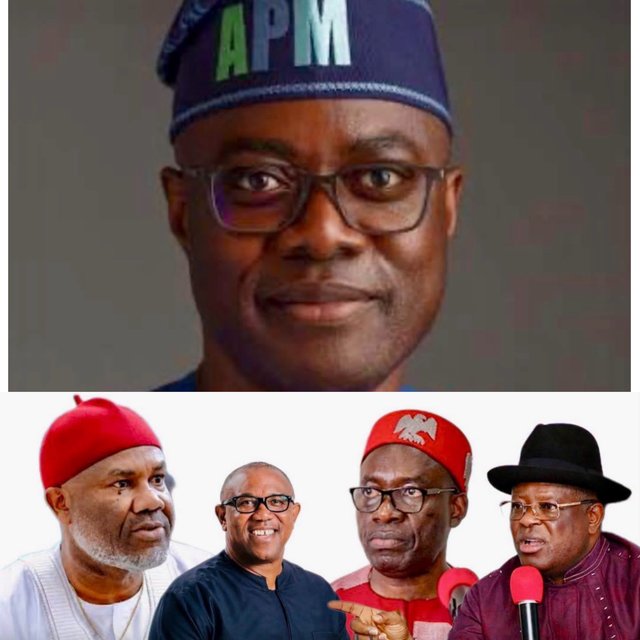
Oyo Governor Seyi Makinde in an APM cap above photos of Peter Obi, Charles Soludo, David Umahi and another politician
Photo: Trend Naija

"Political immaturity": Why attack Peter Obi when you are not contesting against him? Rep Ogene questions Umahi, Soludo

Rep Afam Victor Ogene has accused Works Minister David Umahi and Anambra Governor Charles Soludo of "political immaturity" for repeatedly attacking Peter Obi, pointing out that South-West leaders are not attacking Governor Seyi Makinde over his own presidential ambition.

Read more

A member of the House of Representatives, Hon. Afam Victor Ogene, has questioned what he sees as growing political hostility towards Peter Obi, the NDC presidential candidate and Labour Party candidate in 2023, particularly from prominent politicians in the South-East.

A tale of two regions

Ogene drew attention to what he described as a striking difference between the political atmosphere in the South-West and the South-East ahead of the 2027 general elections.

According to him, governors and ministers from the South-West are not publicly attacking Oyo State Governor Seyi Makinde over his perceived presidential ambition, even though he could challenge President Bola Tinubu in 2027.

In the South-East, however, he questioned why Minister of Works David Umahi and Anambra State Governor Charles Soludo keep directing criticism at Obi, even though neither of them is contesting the presidency against him.

"Southwest governors and ministers are not attacking Seyi Makinde for contesting against Tinubu, but Umahi and Soludo keep attacking Peter Obi even when none of them is contesting. That's political immaturity," Ogene said.

Rivalry or genuine criticism?

His remarks raise a wider question about the nature of political rivalry in Nigeria, particularly in the South-East, where disagreements among prominent figures often attract public attention.

Why should politicians who are not directly competing against Obi appear more concerned about his political future than those who may eventually face him at the ballot box?

For Ogene, the issue goes beyond ordinary disagreement. His criticism suggests some leaders may be letting personal rivalry and party differences overshadow mutual respect.

The comparison with the South-West is particularly interesting. Despite belonging to different parties and having different presidential interests, leaders in that region have often managed their disagreements while keeping working relationships.

Obi is not above scrutiny

Every politician has the right to criticise another, and Obi, as an active national figure, is equally open to public scrutiny. Umahi has recently questioned whether Obi is better than him or Pius Anyim, while Soludo has backed President Tinubu. Ogene's argument raises the question of whether such criticism is based on genuine policy differences or unnecessary rivalry.

Political disagreements are unavoidable in a democracy, but how leaders handle them says a great deal about their political maturity.

Over to you

Do you agree with Hon. Ogene that South-East leaders are unnecessarily attacking Peter Obi, or are Umahi and Soludo simply exercising their right to criticise a fellow politician?

2027 electionsReported
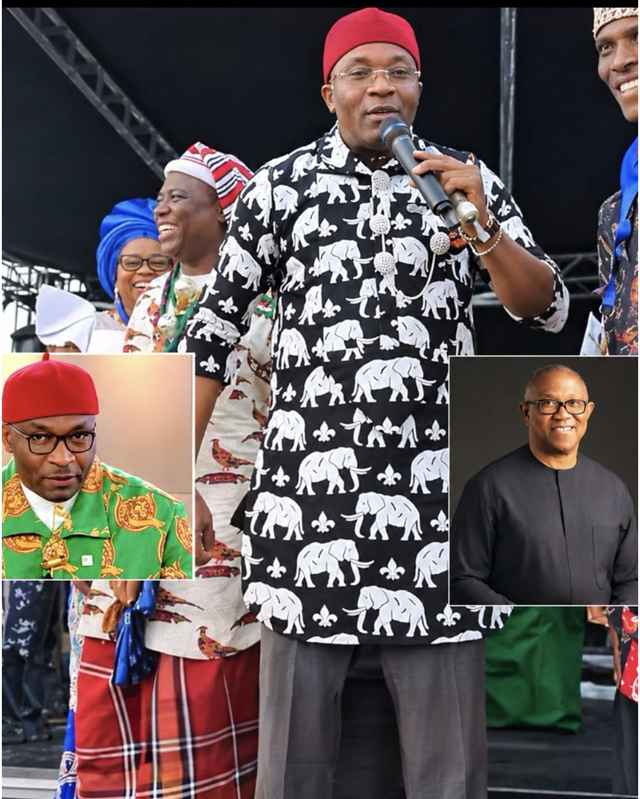
Deputy Speaker Benjamin Kalu speaking into a microphone at the Item Okpi festival in Aba, with inset photos including Peter Obi
Photo: Trend Naija

Crowd erupts in 'Obi' chants as Deputy Speaker Ben Kalu campaigns for Tinubu at Item Okpi festival in Aba

As Deputy Speaker Benjamin Kalu urged the crowd at the Item Okpi cultural festival in Aba to back President Tinubu, sections of the audience reportedly broke into loud chants of "Obi! Obi! Obi!", even as he declared, "On your mandate we shall stand."

Read more

What was meant to be a moment of political mobilisation for President Bola Ahmed Tinubu reportedly took an unexpected turn at the Item Okpi cultural festival in Aba, Abia State, when members of the crowd began chanting the name of Peter Obi.

"Obi! Obi! Obi!"

The Deputy Speaker of the House of Representatives, Benjamin Kalu, was addressing a large gathering at the cultural event when he turned to national politics and began appealing to the people to support President Tinubu.

The response from sections of the audience was not what he appeared to be hoping for. As Kalu spoke in support of the President, loud chants of "Obi! Obi! Obi!" reportedly rose from the crowd.

Even when the Deputy Speaker repeated the familiar declaration, "On your mandate we shall stand," the chants continued, creating an unusual scene in which the politician's message and the crowd's response seemed to be moving in opposite directions.

Why it matters

The moment has drawn attention because of Abia State's political significance and the continuing debate about the popularity of Nigeria's major political figures ahead of the 2027 general elections.

Peter Obi, who contested the 2023 presidential election under the Labour Party and is now the NDC presidential candidate, continues to command a strong following in sections of the electorate, particularly in the South-East.

For Kalu, an influential APC politician from Abia State, the incident highlights the challenge of promoting the ruling party's candidate in a region where political loyalties remain divided.

A cultural festival turned political

Chants from a crowd at a cultural gathering are not a scientific measure of how a state or region will vote. But public reactions like this can still offer a glimpse into the political conversations happening among ordinary Nigerians.

What makes this incident stand out is the setting. The gathering was mainly a cultural celebration, yet it became a scene of competing political expressions once the Deputy Speaker raised the subject of presidential support.

Over to you

Were the chants simply a spontaneous reaction from enthusiastic Obi supporters, or a sign of wider political sentiment in the area? One thing is clear: Ben Kalu was talking about Tinubu, but some voices in the crowd wanted to talk about Obi.